

our impostors
Meet the Impostors. Emerging talents who’ve created artworks for our three expositions.

emma lespoix
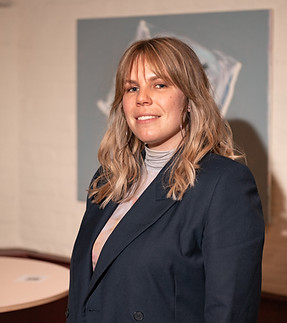
sterre de vresse

emely deceuninck

camille bouquet

wout vermijs

kaat lens

lynne vermeulen

ines raspoet

emma lespoix
Emma Lespoix is the youngest artist represented by Impostor Gallery, yet her work displays a remarkable maturity and clarity of visual language.
The body serves as the point of departure for her practice. From there, her work branches into themes of intimacy, attraction, and repulsion. Her images constantly balance between the familiar and the unsettling.
She explores how forms merge into one another, how volumes relate to each other, and above all, when something becomes beautiful despite—or perhaps because of—its discomfort.
At the core of her practice is also an inquiry into the medium itself. For Lespoix, painting functions as a filter between image and reality. What might feel confronting or even repulsive in everyday life becomes, once translated onto canvas, something that can be observed, contemplated, aestheticized—even beautiful.
This shift is essential: it is not the subject that changes, but our relationship to it.
When does a wound become a compelling image?
When does intimacy become something that can be looked at without being personally implicated?
It is within this tension that her work unfolds, continually navigating the threshold between attraction and resistance.

sterre de vresse
Sterre De Vresse’s practice originates from a strong interest in seventeenth-century still lifes from the history of painting. This classical visual language forms an important foundation for her work.
In addition, she regularly explores imagery related to masks and concealment. Her initial inspiration came from contemporary beauty masks, which she visually associated with death masks. From this association emerged a broader interest in the idea of preservation: preserving a body or identity, and symbolically postponing decay or death.
Technique plays an important role in this process. Sterre chooses subjects that are technically challenging, such as painting the specific textures and sheen of masks. This sheen becomes a recurring subject of investigation throughout her work.
In her recent work Kapje, she depicts herself wearing a transparent rain bonnet. This introduces a different kind of sheen: less smooth or uniform, but creased and mutable. The work also incorporates an homage through the addition of a disproportionately large fly on the head, inspired by Master of Frankfurt’s Portrait of the Artist and His Wife (1496).
In Rozen, she once again refers to compositions from classical still lifes. Here too, sheen plays a central role. For Sterre, the sheen in a glass is not merely a depiction of the object itself, but also a reflection of its surroundings, such as the studio. As a result, the viewing experience becomes indirect: one sees not only the work itself, but also a reflection of the context in which it was created. This gives her work an almost timeless quality, something she herself describes as a form of ‘time travel’.

emely deceuninck
Emely Deceuninck's practice is rooted in memory, autobiography, and visual fragments from her childhood. Her paintings often begin with photographs, family snapshots, or everyday scenes, which she reinterprets through a soft, almost dreamlike visual language.
What appears at first glance to be light and nostalgic often carries a subtle sense of estrangement. Her works seem to unfold in isolated moments, detached from any clear context or defined space—as though the image has not been captured, but remembered.
This haze is fundamental to her practice. Lines remain intentionally soft, forms dissolve into one another, as if memory itself were continually reshaping the image.
Recognition lies at the heart of her work: a ballet costume, a piece of lace, a floral motif, a childhood object that feels both deeply personal and universally familiar. Through these fragments, she constructs a visual language that closely mirrors the experience of remembering itself—incomplete, emotional, and ever-changing.
Emely's paintings invite a gentle way of looking. Not to analyze, but to recognize. And, through that act of recognition, to discover something of yourself.

camille bouquet
Camille's work is characteristic of what Impostor Gallery wants to show and represent: accessibility, recognizability, and emotional honesty. Her paintings speak without words and invite the viewer to feel rather than analyze.
She elevates everyday scenes to something poetic. Her paintings form intimate close-ups of contemporary life.
She celebrates life on canvas. Her colorful works seem to almost vibrate with pleasure and joie de vivre.
Camille possesses a pronounced mannerism in her brushwork, something that clearly stems from her studies in Florence. Her work contains a classical mastery combined with a playful boldness. It is realism, but infused with the vibrant, expressive colors of Fauvism. It is precisely this combination that makes her work so fresh, disarming, and unique.

wout vermijs
Wout Vermijs is a storyteller through and through.
Originally trained in comics at LUCA School of Arts, he is primarily a draftsman, but his need to see his figures in three dimensions also led him to sculpting.
His work exudes naiveté, youthfulness, and joy. There's a disarming freedom in his lines and visual language. Thanks to his background in architecture, houses often appear as quiet or even distinct settings for his stories.
Wout builds worlds. Sometimes literally, sometimes on paper. Always with a wink, always with a love of form, space, and a playful nature.

kaat lens
Kaat Lens is a painter with a disarming love for the medium. Her brushstrokes are sometimes rough and impulsive, but therein lies their strength: joy, courage, and an almost childlike delight. Her works sparkle. Sometimes loud, sometimes bold. But they always exude imagination. She paints who or what she admires, what she desires, or who she herself would like to be.
Kaat's inspiration comes directly from her everyday surroundings, but she effortlessly elevates it to a higher, dreamlike level. An intriguing bag she saw on the street suddenly appears as a glossy icon in her work. Patterns play a significant role in her compositions: the floors, garments, and tiles are adorned with motifs that make her world rich and vibrant.
She works intuitively, without a heavy conceptual framework, which in this exhibition provides a nice counterpoint to artists like Ines Raspoet. Her work is a celebration of the joy of painting itself, unfiltered and sincere.

lynne vermeulen
Lynne Vermeulen paints slowly. Her work doesn't emerge from impulse, but from a profound process of reflection, dissection, and imagination. With a background in screenplay and prose (RITCS and LUCA School of Arts), she starts from a story. Everything is questioned, down to the smallest detail.
In her studio, she spends at least as much time reading and researching as she does painting. Theory and practice go hand in hand. She recently switched to oil paint, a medium she describes as vibrant and unforgiving. That's precisely why she lets it guide her: it forces her to let go and flow.
Her debut in oil painting is on display here for the first time at Impostor Gallery – an enchanting result of a new love between maker and material.

ines raspoet
Ines Raspoet paints with both her mind and her heart. Her work is abstract and highly conceptual, with a fascination for structure, balance, and repetition. She often chooses cool blue hues, which feel both distant and tender.
Her forms seem almost digital, yet they are rooted in her inner, organic world of feeling. She seeks peace: in the canvas, and within herself. Her work is an exercise in harmony, a counterbalance to the stimulating world we live in.
Grids, rhythm, and organic shapes give her a sense of security. Her paintings are whispering pleas for gentleness. She offers the viewer a place of calm, a place where looking can be healing.